

Cold Plunge Chiller vs Ice: The Real Cost of Staying Cold at Home
Ice can get a plunge cold, but repeated bags, melting, temperature changes, and water maintenance can make the routine harder to sustain. Here is how a cold plunge chiller changes the equation.

The Hidden Cost of the Ice Method
Ice works. The challenge is that it creates a recurring expense and another task every time you want to plunge.
A typical plunge can hold around 100 gallons. Bringing tap water down toward the low 50s or below can require several bags of ice, especially when outdoor temperatures are high and the surrounding environment is constantly warming the water.
Recurring Ice Cost
Calculate your real cost using sessions per week, bags per session, and your local price per bag.
Hidden Logistics
Include transportation, storage, melted ice, and the time required to purchase and handle bags repeatedly.
Water Maintenance
Ice does not replace filtration. Water still needs circulation, cleaning, and appropriate maintenance.
Annual Perspective
If you plunge three to five times a week, compare the total yearly ice spend with the upfront cost of a standalone chiller.
Sessions per week × bags per session × local bag price × 52 weeks = estimated annual ice cost.
What a Chiller Actually Changes
A dedicated cold plunge chiller does more than lower water temperature. It creates a repeatable system that can cool, circulate, and maintain the water between sessions.
Temperature Consistency
Instead of estimating how much ice you need each time, the chiller can maintain a selected temperature. Polar Dive's Water Chiller is designed to bring water down to roughly 39°F.
Filtration & Circulation
Circulation and filtration help keep plunge water cleaner between uses. The Polar Dive unit uses 20-micron filtration.
Less Daily Logistics
Once installed, a chiller removes the need to repeatedly purchase, transport, and add bags of ice before a session.
Compact equipment also makes placement easier. A unit measuring approximately 12 × 12 × 13 inches and weighing around 40 pounds can fit into a garage corner, patio area, or another suitable location near the plunge.
Matching the Setup to Your Space and Budget

You Already Own a Tub
If you already have a bathtub, stock tank, or compatible plunge vessel, a standalone chiller can turn that existing setup into a temperature-controlled cold plunge.
Starting on a Budget
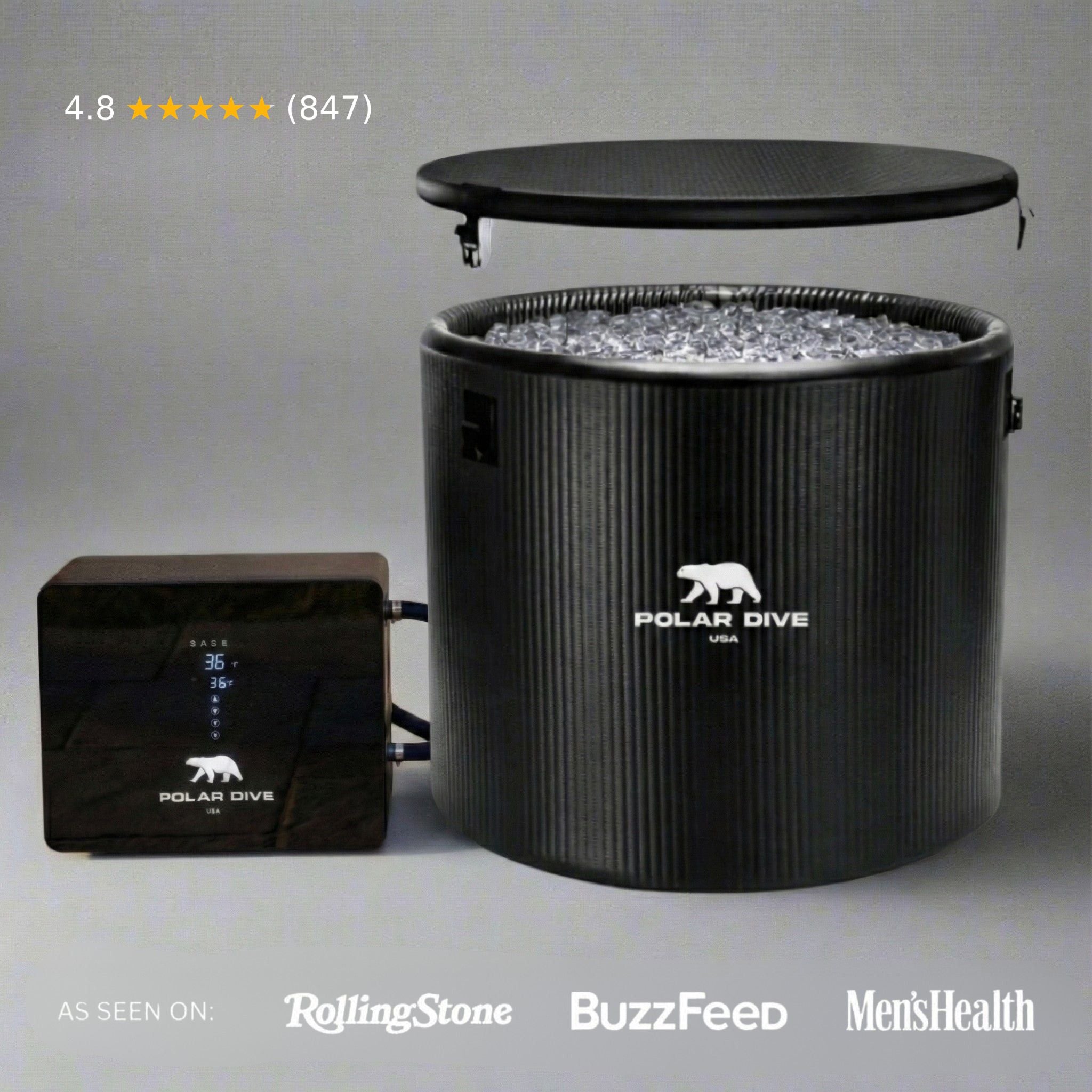
An insulated plunge such as The Polar Dive provides a 105-gallon capacity in a 32-inch diameter footprint. You can begin with ice and add a chiller later.

Full System
The Polar Dive PRO combines a sturdier plunge setup with chilled performance for people who want a dedicated system from the beginning.
Heavy-Duty Setup
The Polar Dive MAX is positioned as the heavy-duty option for households that plunge frequently or share the setup.
Chiller vs Ice: What Are You Actually Paying For?
| Factor | Ice Method | Chiller Method |
|---|---|---|
| Upfront cost | Usually lower if you already own a tub | Higher initial investment |
| Recurring cost | Ice required regularly | Primarily electricity and routine maintenance |
| Temperature | Depends on water volume, ice quantity, and environment | Designed to maintain a selected temperature |
| Filtration | Must be handled separately | Can combine circulation and filtration |
| Convenience | Requires buying and adding ice | Designed for a ready-to-use routine |
| Long-term use | Recurring ice expense | Higher upfront cost with ongoing operating costs |
Protocol: How Cold, How Long, How Often
A cold plunge routine should be simple enough to repeat. Starting gradually is generally more practical than immediately chasing the coldest possible temperature.
If you time cold immersion around training, remember that the timing may matter depending on your goal. Some research suggests immediate cold-water immersion after resistance training can affect certain training adaptations, so athletes may choose to separate the two activities.
Practical Tips That Keep People Consistent
01. Maintain the Water
Change water according to your maintenance routine and level of use. Filtration does not eliminate the need for cleaning.
02. Use a Cover
A cover helps reduce warming, keeps debris out, and can reduce how often the chiller needs to cycle.
03. Shower First
Showering before a plunge helps reduce body oils, sunscreen, and other contaminants entering the water.
04. Plan for Drainage
Position the plunge near an appropriate drain or hose connection so water changes do not become a major chore.
05. Maintain the Filter
Rinse the filter according to the manufacturer's maintenance instructions and keep a replacement available.
06. Build a Routine
A consistent time of day can make cold exposure easier to maintain than relying on motivation alone.
Which Setup Makes Sense for You?
Existing Tub Owners
If your current tub is compatible, a standalone chiller can be the simplest way to add controlled cold-water temperature without replacing the vessel.
Budget-Conscious Beginners
Starting with an insulated plunge and using ice gives you a lower-entry setup, with the option to add a chiller later.
Frequent Users
If you expect to plunge several times every week, the convenience of a dedicated chiller becomes more significant because ice is no longer a recurring errand.
Shared Households
A more substantial plunge and dedicated chilling system can make sense when multiple people will use the setup regularly.
Performance-Focused Users
A controlled temperature makes it easier to keep your protocol consistent rather than adjusting every session based on available ice.
Complete Setup Buyers
Those starting from scratch can compare complete Polar Dive options instead of building a plunge one component at a time.
Frequently Asked Questions
Do I need a chiller for an ice bath?
No. You can cool a plunge with ice, but you will need ice whenever the water needs to be cooled. A chiller replaces that recurring task with a powered cooling system.
How cold should the water be?
Below 59°F / 15°C is commonly used for cold exposure protocols. Many experienced users choose temperatures around 45°F to 55°F, but individual tolerance and goals vary.
Can a chiller work with my bathtub?
Compatible standalone chillers can be used with bathtubs, stock tanks, and suitable insulated plunge tubs. Always check the manufacturer's compatibility and connection requirements before installation.
How often should I change the water?
A common starting point is roughly once a week or every three to five sessions, with the actual schedule depending on usage, filtration, water treatment, and manufacturer recommendations.
Is a cold plunge chiller expensive to run?
Running costs depend on the unit, local electricity rates, ambient temperature, insulation, target water temperature, and how frequently the system cycles. An insulated plunge and cover can help reduce unnecessary heat gain.
Does a chiller eliminate water maintenance?
No. Cooling and filtration make maintenance easier, but the water still needs appropriate cleaning, filtration, and replacement according to the equipment manufacturer's instructions.
Ready to Stop Buying Ice?
The most useful recovery setup is one that fits naturally into your routine. For frequent cold exposure, a dedicated chiller can turn cold-water therapy from a recurring ice-buying task into a system that is ready when you are.
Build Your Cold Plunge Setup
Compare the Polar Dive Water Chiller, The Polar Dive, PRO, and MAX to find a setup that fits your available space, usage pattern, and preferred level of equipment.
Shop Water Chiller Compare Polar Dive Options Read Customer Reviews