
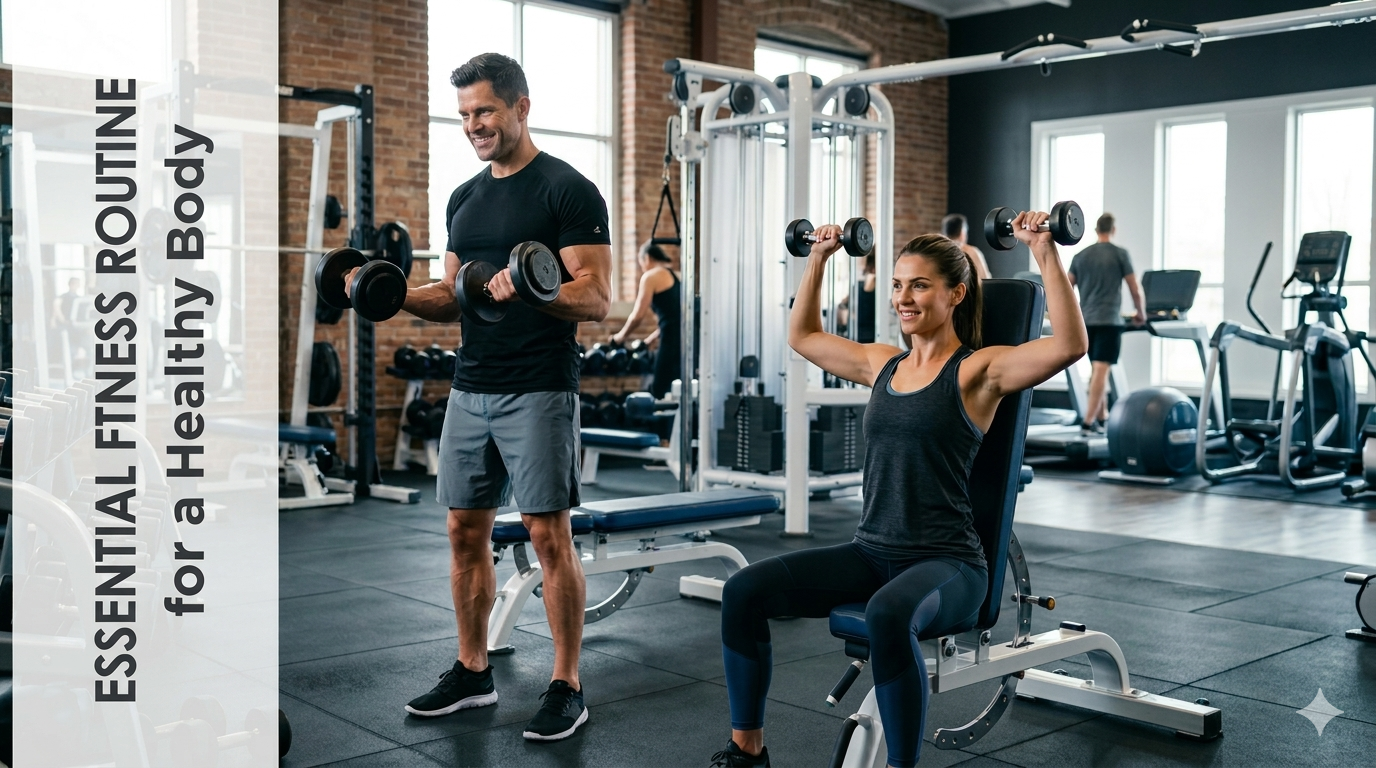
Gym Exercising: Benefits, Workouts, and Fitness Routine for a Healthy Body
Gym Workouts Guide for Strength and Fitness
Performing workouts in a gym is considered one of the most efficient ways to develop strength and improve overall health. Whether you are a beginner or a professional athlete, a proper training plan combined with good nutrition can help you achieve your fitness goals.
Workouts are not only beneficial for physical appearance but also improve mental health, focus, and overall well being.
Advantages of Regular Gym Activities
Regular gym training provides many health benefits.
Strength exercises help build muscle mass, improve body strength, and increase overall endurance. They also support heart health and help burn excess body fat.
Regular workouts may reduce the risk of diseases such as diabetes, hypertension, and obesity.
Exercise also helps reduce stress, improve sleep quality, and increase concentration and mental focus.
Strength Exercises for Muscle Development
Strength training is commonly performed in gyms using different techniques.
Exercises such as squats, deadlifts, and bench press target multiple muscle groups and promote muscle growth.
Progressive overload, which means gradually increasing workout intensity, is important for continuous improvement and better results.
A combination of free weights, machines, and bodyweight exercises ensures balanced muscle development.
Cardio Activities for Endurance
Cardio exercises are essential for improving cardiovascular health and increasing endurance.
Common cardio activities include running, cycling, rowing, and treadmill workouts, all of which strengthen the heart and lungs.
Many trainers recommend combining cardio with strength training for better overall fitness results.
HIIT workouts, or High Intensity Interval Training, are also effective for fat loss while maintaining muscle mass.
Importance of Warming Up and Cooling Down
A proper workout session should always begin with warming up and end with cooling down exercises.
Warming up increases blood circulation, improves flexibility, and helps reduce the risk of injury.
Cooling down through light exercises or stretching helps muscle recovery and reduces soreness after workouts.
Skipping these steps may lead to muscle strains and joint pain.
Recovery and Nutrition
Recovery and nutrition are just as important as exercise itself for achieving fitness goals.
Protein rich foods help repair and build muscles, while carbohydrates provide energy for workouts.
Staying hydrated by drinking enough water is essential for maintaining performance and preventing dehydration.
Proper sleep allows the body to rest, recover, and grow stronger.
Creating a Workout Routine
Consistency plays a key role in achieving fitness goals.
Beginners should start with three to four workouts per week and gradually increase intensity over time.
Advanced athletes often follow structured workout splits targeting different muscle groups on different days.
Setting clear goals and tracking progress helps maintain motivation and ensures steady improvement.